Metal Fabrication
What is Metal Fabrication?
Metal fabrication is the process of turning raw sheet metal, plate, or other stock into finished parts and products. It starts with a material selection, moves through cutting and shaping, and ends with assembly or finishing. The exact sequence changes depending on the part: a simple bracket might only need shearing and bending, while a production assembly could require plasma cutting, rolling, and welding before it is ready to ship.
What Materials Do We Fabricate?
The right material depends on what the part needs to do: how much load it carries, what environment it sits in, and what it costs to produce. Some of the different materials we work with include:
- Galvanized Steel
- Aluminum
- Stainless Steel
- Satin Coat
- Hard Plate
- Mild Steel
If your project is structural or load-bearing and cost matters, galvanized steel is usually the right call. If it needs to hold up in a food processing, marine, or high-moisture environment without added coatings, stainless steel earns its higher price. If weight is the constraint, from a component that needs to be carried or mounted to one that moves, aluminum is typically the better fit. To determine the best material for your needs, get in touch with our team!
Fabrication Processes We Use
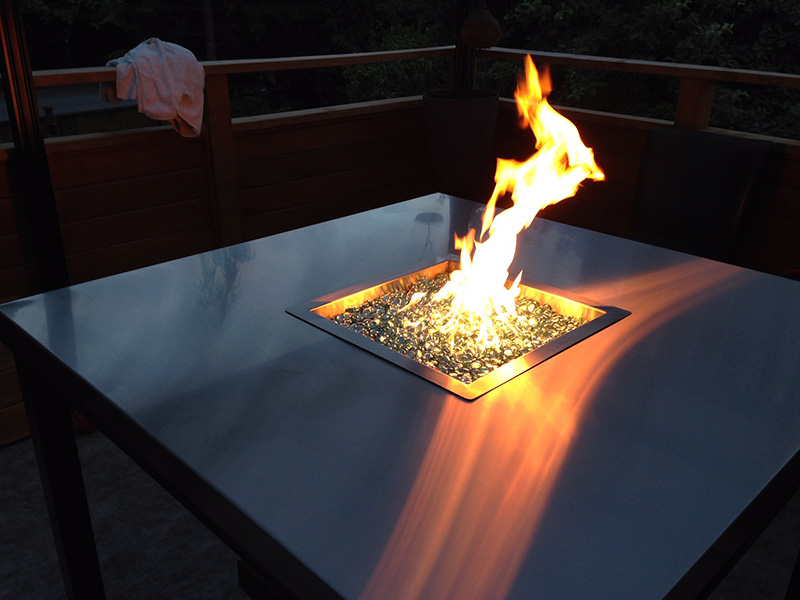
Once we know the material, we match it to the right process. Depending on your part, our shop can bring any combination of the following to your project:
- CNC plasma cutting for materials up to 1″ thick, for clean, repeatable cuts on steel and stainless steel
- CNC router cutting for precision work on plastics and aluminum
- Pipe fabrication, including cutting, bevelling, and welding for pipes, elbows, tees, flanges, and reducers
- Forming, covering rolling, die forming, extrusion, and forging
- Bending with brake presses, for consistent angles across a production run
- Metal rolling for curved or cylindrical parts
- Assembly: putting fabricated components together into a finished product before it leaves our shop
Our welding team supports every one of these processes, with MIG, TIG, stick, and sanitary welding available depending on the material and the finish your part needs.
How We Approach a New Fabrication Project
Every project starts with your specs. Send us a model, an engineered drawing, or a rough sketch, and we’ll use it to confirm dimensions, tolerances, and materials before we cut anything. If the details are still being worked out, we can talk through options with you instead of guessing what the part needs to do.
Once the design is confirmed, we select the material and the combination of cutting, forming, or bending processes that gets you there efficiently. Larger runs move through our CNC equipment for repeatability from the first part to the last; one-off or low-volume jobs get more hands-on attention from our fabricators. Either way, welding and assembly happen in-house, so your part comes together under one roof instead of being handed between shops.
Why Fabricate With LWS Manufacturing & Welding
We have been serving the Lower Mainland since 1983, and our fabricators bring over 100 years of combined experience to the floor. Our welders are certified under CSA W47.1 and CSA W59, so the work is backed by recognized credentials, not just a claim on a website. When you need a part built to spec, in the material that actually suits the job, our team is ready to talk through it.
Frequently Asked Questions
What is the difference between steel, stainless steel, and aluminum fabrication?
Steel gives you strength and cost efficiency but needs a coating to resist corrosion. Stainless steel resists corrosion and chemical exposure on its own, at a higher material cost. Aluminum is the lightest of the three and easy to cut, though it takes more care to weld and carries less tensile strength. Which one fits your project depends on load, environment, and budget.
How thick can you cut with CNC plasma cutting?
Our CNC plasma cutting handles materials up to 1 inch thick, which covers most steel and stainless steel fabrication work. For plastics and aluminum, our CNC router is the better fit for precision cutting.
Do I need an engineered drawing before you can start my project?
Not necessarily. We can work from a fully engineered drawing or a rough sketch, and we will confirm dimensions and specs with you before fabrication starts either way.
Can you handle both one-off parts and larger production runs?
Yes. Our CNC equipment is built for repeatable, larger runs, while our fabricators handle one-off or low-volume jobs with the same attention to spec and finish.
What welding processes support your fabrication work?
We offer MIG, TIG, stick, and sanitary welding in-house, so your fabricated parts are welded and assembled under one roof rather than sent to a separate shop.
Are your welders certified?
Yes. Our welding team holds CSA W47.1 and CSA W59 certifications.
Our team is ready to answer all your questions
Please Note : Not that all the fields that are marked with a red dot are mandatory.